With gas prices fluctuating wildly and the cost of living hitting record highs, every driver is looking for a way to stretch their mileage. Enter the SynGas Chip (SynGas OBD Fuel Saver)—a small, plug-and-play device that claims to optimize your vehicle’s Electronic Control Unit (ECU) to reduce fuel consumption by up to 35%.
But does it actually work, or is it just another “magic” gadget destined for the glovebox?
In this comprehensive review, we dive deep into the mechanics, the science (and the skepticism), the pros and cons, and whether the SynGas Chip is a legitimate investment for your car.

What is SynGas Chip?
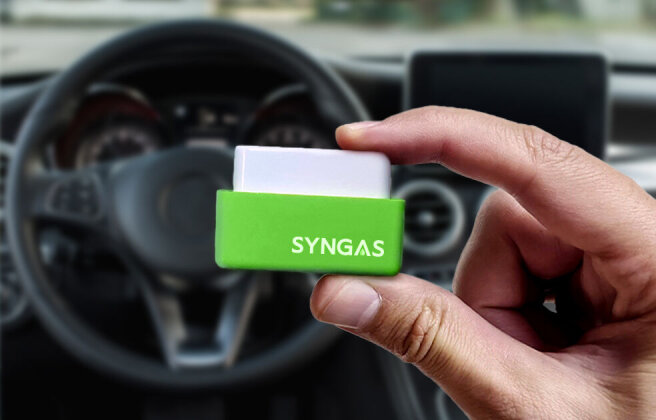
SynGas Chip, or SynGas OBD Fuel Saver, is a compact plug-and-play device that connects to your vehicle’s OBD2 port, usually under the dashboard. It optimizes the Engine Control Unit (ECU) in real-time to boost fuel efficiency, power, and reduce emissions.
Designed for cars from 1996 onward with OBD2 compatibility, it works on gas and diesel engines in sedans, SUVs, trucks, and vans. No apps, tools, or modifications needed—it’s fully reversible by unplugging.
Key Features at a Glance:
-
Plug-and-Play: No tools or professional installation required.
-
Universal Compatibility: Works on almost all vehicles built after 1996 (USA) and 2001 (Europe).
-
Safe for Your Car: It does not exceed the manufacturer’s engine limits.
-
Eco-Friendly: Reduces the carbon footprint by optimizing combustion.
-
Removable: Unplugging the device restores the car to factory settings instantly.
How Does SynGas Work? The Science Behind the Chip
Every modern car has an ECU—essentially the “brain” of the vehicle. This computer manages the engine’s performance, fuel intake, and throttle response. Manufacturers usually set these ECUs to “average” settings to accommodate drivers globally, regardless of climate or driving style.
The SynGas Chip acts as a temporary bridge. Here is the step-by-step process:
-
Data Collection: Once plugged into the OBD2 port, the chip begins communicating with the ECU. It tracks how much throttle you apply, your average speed, and engine load.
-
Mapping: After driving roughly 200 kilometers (150 miles), the chip creates a “profile” of your driving habits.
-
Optimization: SynGas sends signals to the ECU to adjust the fuel-to-air ratio and injection timing. By leaning out the fuel mixture during steady cruising and optimizing the spark timing, it aims to extract more energy from every drop of fuel.
-
Continuous Adjustment: It doesn’t just set and forget; it continues to monitor and tweak settings to maintain peak efficiency.
Features and Technical Specifications
When you unbox the SynGas OBD Fuel Saver, you’ll notice its compact, sleek design. But the real value lies in the internal firmware.
-
Silicon-Based Microprocessor: High-speed processing ensures there is no “lag” in engine communication.
-
OBD2 Protocol Support: Compatible with J1850 PWM, J1850 VPW, ISO9141-2, ISO14230-4 KWP, and ISO15765-4 CAN.
-
Voltage: Operates on the 12V power supplied directly by the OBD2 port.
-
Indicator Lights: LED lights signal when the device is successfully communicating with the ECU.
-
Dynamic Re-mapping: Unlike static “tuner” chips, SynGas adapts to changes in driving style (e.g., city vs. highway).
Benefits of Using SynGas OBD Fuel Saver Chip:
While the headline benefit is saving money, the SynGas Chip offers several peripheral advantages:
1. Significant Fuel Savings
The primary goal is a 15% to 35% reduction in fuel consumption. For a daily commuter spending $300 a month on gas, a 20% saving equals $60 back in your pocket every month.
2. Improved Engine Response
Users often report a smoother “pull” during acceleration. By optimizing the torque curve, the engine feels less strained under moderate loads.
3. Lower Emissions
More efficient combustion means less wasted fuel exiting through the exhaust. This makes your vehicle slightly “greener” without requiring a hybrid engine.
4. No Mechanic Needed
The DIY nature of the device means you save on labor costs. You don’t need to be a “gearhead” to install it.
Who Should Use SynGas OBD Fuel Saver?
Daily commuters facing high fuel bills benefit most, especially with 2026 price spikes. Long-haul drivers, families with SUVs, and delivery pros see big ROI from mileage boosts.
Eco drivers wanting lower emissions without hybrids love it. Anyone with 1996+ OBD2 cars (gas/diesel) fits—check your port first.
Who Should Avoid the SynGas Chip?
Skip if your car pre-dates 1996 without OBD2, or you’re in a no-mod lease fearing scrutiny (though it’s non-permanent). Not for electric/hybrid ECUs—it targets combustion engines.
Tinkerers wanting custom tunes might prefer pro remaps, but SynGas suits set-it-and-forget-it users.
Pros and Cons: An Honest Assessment
Pros:
-
Affordable: Costs less than a full tank of gas.
-
Non-Permanent: Does not void most warranties because it leaves no trace once unplugged.
-
Wide Compatibility: Works on Gas, Diesel, and Hybrid vehicles (with OBD2).
-
Maintenance Free: Once installed, you don’t need to touch it.
Cons:
-
Wait Period: You won’t see results for the first 150 miles.
-
Variation: Results vary wildly based on vehicle condition and driving style.
-
Counterfeits: Due to its popularity, many “dummy” chips are sold on marketplaces like Amazon/eBay. Always buy from the official site.
SynGas Installation Guide: Step-by-Step
Installing the SynGas Chip is easier than changing a lightbulb.
-
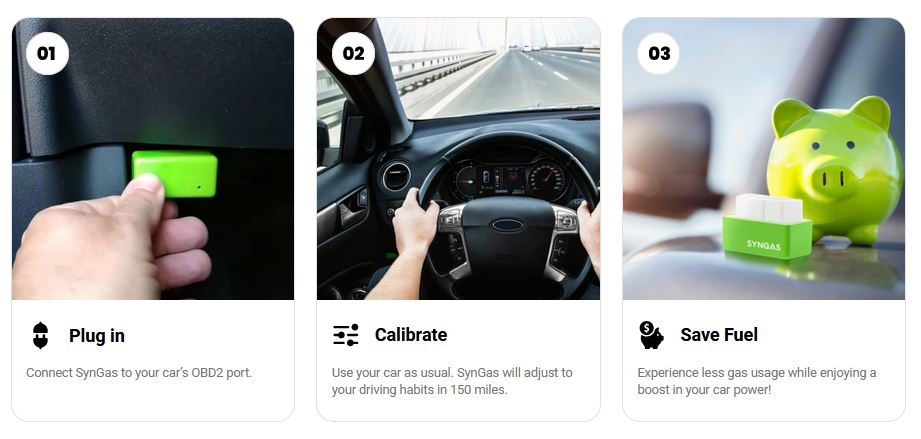
Locate the OBD2 Port: Usually found under the dashboard, near the steering wheel, or behind the center console.
-
Ignition Off: Ensure your car is turned off and the key is out of the ignition.
-
Plug In: Insert the SynGas Chip into the port.
-
Reset: Press the reset button on the chip (usually via a small pinhole) for 5 seconds.
-
Calibrate: Turn the ignition to the “On” position (but don’t start the engine). Wait 30-60 seconds for the chip to establish a connection.
-
Drive: Start the engine and drive as you normally would. The chip will calibrate over the next 150 miles.
Safety and Side Effects
Is it safe for my engine?
Yes. The SynGas Chip works within the safety parameters defined by your car’s manufacturer. It does not “overclock” the engine or push the fuel injectors beyond their rated capacity.
Will it drain my battery?
The power draw is negligible. However, if you plan to leave your car sitting for more than a month without starting it, it is always a good idea to unplug any OBD2 devices.
Customer Reviews & Experiences
The consensus among verified purchasers is generally positive, though expectations must be managed.
-
The “Believer”: “I drive a 2018 Ford F-150. I was skeptical, but after a week of driving, my MPG went from 18 to 21.5. It’s not a miracle, but it adds up!” — Mark T., Texas.
-
The City Driver: “I use it for my Prius. While the savings aren’t as massive as a gas-guzzler, I noticed the engine switches to EV mode more smoothly.” — Sarah L., California.
-
The Skeptic: “I didn’t notice anything for the first two days. I almost returned it. On day four, I noticed I had a quarter-tank more than usual at the end of my work week.” — James R., UK.
Pricing, Discounts, and Where to Buy SynGas OBD Fuel Saver?
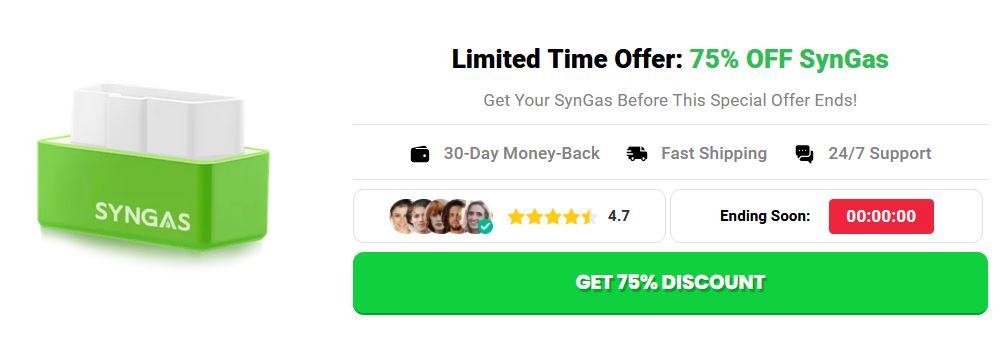
To ensure you receive the genuine SynGas Chip with the updated 2024 firmware, you should only purchase through the Official Website.
Current Pricing Tiers:
-
1 × SynGas Chip: ~$39.99 (Retail $79.98)
-
2 × SynGas Chips (Best for Multi-car households): ~$69.95
-
3 × SynGas Chips (Best Value): ~$82.95
Note: Prices are subject to change based on seasonal promotions.
Money-Back Guarantee
The manufacturers offer a 30-Day Money-Back Guarantee. If you don’t see a noticeable difference in your fuel economy after the 150-mile calibration period, you can return the device for a full refund. This eliminates the risk for the consumer.
Comparison: SynGas OBD Fuel Saver vs. Other Fuel Savers
| Feature | SynGas Chip | Traditional Remapping | Fuel Additives |
| Cost | Low ($40) | High ($400+) | Recurring ($15/tank) |
| Ease of Use | Plug & Play | Professional Required | Manual Pouring |
| Permanence | Removable | Permanent/Hard to Undo | Temporary |
| Risk | Low | High (Engine Stress) | Moderate (Clogs) |
FAQs (Frequently Asked Questions)
Q1: Will SynGas damage my car’s ECU?
No. SynGas only communicates with the ECU; it does not overwrite the core factory firmware. Once unplugged, your car returns to its original settings.
Q2: Does it work with diesel engines?
Yes, SynGas is compatible with both gasoline and diesel engines, provided the vehicle was manufactured after 1996.
Q3: Why don’t car manufacturers include this technology?
Manufacturers design cars for a global market. They must account for poor fuel quality in some countries and extreme weather in others. They use “one-size-fits-all” settings. SynGas allows you to optimize the car specifically for your driving conditions.
Q4: How long does it take to see results?
You need to drive approximately 150–200 miles (250 km) for the device to gather enough data to optimize the mapping.
Q5: Can I move it from one car to another?
Yes, but you will need to perform the “Reset” procedure so the chip can relearn the new vehicle’s data.
Final Verdict: Is SynGas Worth It?
If you are looking for a miracle device that will turn your SUV into a Tesla, you will be disappointed. However, if you are looking for a scientific, low-risk way to optimize your engine’s efficiency, the SynGas Chip is a winner.
With a 30-day money-back guarantee and a price point lower than a tank of premium gas, the ROI (Return on Investment) is achieved in just a few weeks of driving. It is a smart, “invisible” way to fight back against rising fuel costs.