
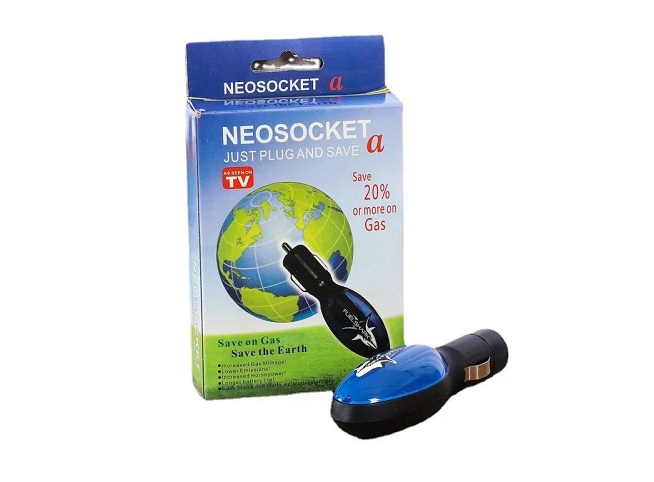
With gas prices fluctuating more than the stock market, every driver has the same question: How can I get more miles out of my tank without buying a hybrid? Enter the NeoSocket Fuel Saver. It’s a compact, plug-and-play device that promises to optimize your vehicle’s fuel consumption by 15% to 35%. But in a world of “miracle” car gadgets, does the NeoSocket actually deliver, or is it just a fancy LED light for your dashboard?
In this deep dive, we analyze the technology, the real-world performance, and the “OBD2 vs. 12V” debate to help you decide if this is the right investment for your commute.
What is NeoSocket Fuel Saver?
The NeoSocket Fuel Saver is a micro-electronic device designed to stabilize your vehicle’s electrical system and optimize fuel efficiency. Depending on the specific model, it either plugs into your 12V cigarette lighter or your OBD2 diagnostic port.
The core premise is “Electrical System Smoothing.” Modern vehicles are packed with electronics—AC, infotainment, headlights, and sensors—all of which put a load on the alternator. The NeoSocket acts as a bridge, utilizing internal capacitors to manage these voltage spikes, theoretically allowing your engine to focus its energy on driving rather than powering gadgets.
The Evolution: From 12V Sockets to OBD2
Originally, NeoSocket became famous for its 12V cigarette lighter design. However, the newest iterations, often referred to as NeoSocket OBD2, have transitioned to the diagnostic port.
-
The 12V Version: Focuses on voltage stabilization via capacitors.
-
The OBD2 Version: Claims to “re-map” or “tune” the ECU (Engine Control Unit) for better fuel-to-air ratios.
How Does NeoSocket Work? (The Science of Stabilization)
To understand NeoSocket, you have to understand the Alternator Load.
When you turn on your air conditioning or high beams, the alternator works harder to produce more electricity. This creates “magnetic drag” on the engine, which increases fuel consumption.
1. Voltage Smoothing (The Electrolysis Condenser)
The NeoSocket contains a high-quality capacitor (also known as an electrolytic condenser). This component stores small amounts of electricity and releases them instantly when there is a sudden demand.
-
Example: When your AC compressor kicks in, instead of the alternator taking the full hit, the NeoSocket discharges its stored energy to “cushion” the electrical shock.
2. ECU Optimization (For OBD2 Models)
If you are using the OBD2 variant, the device communicates with the car’s computer. After driving approximately 150 miles (200km), the device gathers enough data to suggest slight adjustments to the fuel injection timing. By optimizing these “maps,” the engine burns fuel more completely, reducing waste through the exhaust.
Key Features Breakdown:
-
Plug-and-Play Simplicity: No mechanic required. You don’t even need to open the hood.
-
Eco-Friendly Design: By increasing combustion efficiency, it naturally lowers your vehicle’s CO2 emissions.
-
Universal Compatibility: Works on almost any car made after 1996 (OBD2) or any car with a cigarette lighter (12V).
-
No Permanent Changes: Unplugging the device instantly restores your car to its factory settings. This is crucial for leased vehicles or maintaining warranties.
-
Internal Fuse Protection: High-quality versions include a built-in fuse to prevent short circuits from damaging your car’s sensitive electronics.
NeoSocket OBD2 Fuel Saver Benefits: What Can You Actually Expect?
While the marketing might claim 35% savings, real-world users generally see a more modest, yet significant, improvement.
- Improved Throttle Response
Many users report that their car feels “lighter” or more responsive. This is likely due to the electrical stabilization providing a more consistent spark to the spark plugs.
- Smoother Idle
If your car “shudders” slightly when the AC is on, the NeoSocket’s capacity to handle load fluctuations often smooths out the idle RPMs.
- Longevity of Electronics
By preventing voltage spikes, you are effectively protecting your battery, alternator, and expensive sensors from premature wear.
- Monthly Savings
For a daily commuter spending $300 a month on gas, even a conservative 10% saving translates to $360 a year—meaning the device pays for itself in just a few months.
Who Should Use NeoSocket Fuel Saver?
The device might appeal to:
-
Budget‑conscious drivers, who are tired of high fuel prices
-
Car‑enthusiast beginners who like “plug‑and‑play” gadgets
-
Non‑technical owners who want a simple “no‑maintenance” solution
However, real fuel savers are:
-
Better driving habits
-
Proper tire pressure
-
Regular maintenance (air filters, spark plugs, oil changes)
-
Using cruise control on highways
If you’re looking for a one‑socket gadget that magically unlocks 30% better mileage, NeoSocket is not that solution.
Pros and Cons: An Honest Assessment
Pros
-
Cost-Effective: One of the cheapest “performance” upgrades on the market.
-
Zero Risk to Warranty: Since it doesn’t modify the hardware, it cannot void your car’s warranty.
-
Portable: Can be moved from car to car in seconds.
-
Enhanced Performance: Beyond fuel, it can improve the clarity of your car’s audio system by removing electrical “noise.”
Cons
-
Variable Results: Results depend heavily on your driving habits and vehicle age.
-
Delayed Gratification: For OBD2 models, you must drive 150 miles before the device “learns” your car.
-
Counterfeits: Because of its popularity, many “cheap” versions (with just a light and no capacitor) exist on Amazon/eBay.
Safety and Warnings
Is it safe? Yes. The NeoSocket is a passive/semi-passive device. It does not “overclock” your engine or force it to run at dangerous temperatures.
-
Heat: Ensure the device is plugged in firmly. A loose connection in a cigarette lighter can cause heat.
-
Battery Drain: While the LED stays on for a few minutes after the car is off, it consumes less power than a digital clock. If you aren’t driving for more than two weeks, it is recommended to unplug it.
NeoSocket vs. FuelSync: Which is Better?
You will often see FuelSync and NeoSocket used interchangeably. Here is the breakdown:
-
FuelSync typically refers to the newer OBD2-style chips. These are better for people who want “smart” tuning.
-
NeoSocket usually refers to the 12V socket version. This is better for older cars (pre-1996) or those who want to improve electrical stability and audio quality.
Pricing and Where to Buy (Official Guidelines)
To ensure you get a device with a functional capacitor and a genuine ECU chip, you should only buy from the official websites.
-
Single Unit: ~$49.99
-
Buy 2, Get 1 Free (Popular): ~$35.00 per unit.
-
The “Family Pack” Often brings the price down to under $25 per unit.
Money-Back Guarantee: Most official vendors offer a 30-day or 60-day money-back guarantee. This is vital for a product where results vary by vehicle. If you don’t see a change in your mileage after 3 tanks of gas, you can return it.
Customer Reviews: What are People Saying?
“I was skeptical, but my 2012 Honda Civic was getting 28 MPG. After two weeks with the NeoSocket OBD2, I’m hitting 32 MPG consistently. It’s not a miracle, but it adds up.” — Mark T., Verified Buyer
“Bought it for the fuel savings, kept it for the radio. My speakers don’t have that weird hum anymore when I accelerate.” — Sarah L., Daily Commuter
FAQs About NeoSocket Fuel Saver
Q. Does NeoSocket Fuel Saver Really Save Fuel?
No conclusive evidence shows that NeoSocket Fuel Saver improves fuel economy on modern vehicles. Independent tests on similar devices show no change or even decreased MPG on the same route, suggesting its impact is negligible or nonexistent.
Q. Will NeoSocket damage my car’s engine?
No. NeoSocket works within the safety parameters of your vehicle’s factory settings. It does not change the physical structure of the engine.
Q. Where should I plug the NeoSocket Fuel Saver?
NeoSocket usually plugs into the 12‑volt cigarette lighter socket. Some variants claim to work via the OBD2 port, but experts caution that adding unapproved devices to OBD2 can cause communication issues.
Q. Can I Use NeoSocket on Diesel and Hybrid Cars?
Marketers claim compatibility with gasoline, diesel, and hybrid vehicles, but there is no published test data confirming effectiveness on any specific engine type.
Q. How long does it take to see results?
For 12V models, you may notice smoother idling immediately. For OBD2 models, the device requires 150 miles (approx. 200km) to calibrate to your driving style.
Q. Can I use it in a Hybrid?
While it won’t damage a hybrid, the fuel savings are negligible because hybrids already use advanced electrical management.
Q. Does NeoSocket Work with All Car Brands?
NeoSocket is marketed as universal for most cars made after 2000, but on‑board electronics vary by model. Some users report no effect or minor glitches, even on newer vehicles.
Q. Is NeoSocket Fuel Saver Worth Buying?
Given the lack of proof, unverified claims, and the existence of better‑proven fuel‑saving methods, NeoSocket is not worth buying for drivers seeking real MPG gains. It may appeal as a low‑risk experiment, but not as a reliable fuel‑saving tool.
Final Verdict: Is NeoSocket Worth It?
If you are looking for a way to “beat the system” and get 100 miles per gallon, you’ll be disappointed. However, if you are a savvy driver looking for a low-cost, zero-risk way to optimize your vehicle’s efficiency, the NeoSocket is a solid choice.
It bridges the gap between old-school mechanics and modern electrical needs. Given the 60-day money-back guarantee usually offered, the risk is virtually non-existent.