
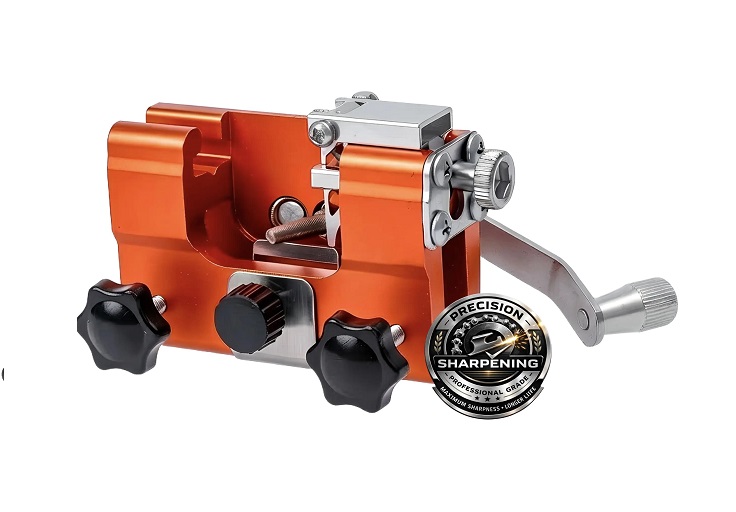
If you own a chainsaw, you know the feeling: the saw starts bogging down, smoke rises from the cut, and you’re pushing harder than ever while the chain barely bites. That’s the moment maintenance can’t wait. The Qinux Klampero is a compact, manual chainsaw chain sharpener designed to fix that problem by guiding a file at a fixed angle while the chain stays on the bar. It’s not a bench grinder or an electric sharpener—it’s a jig that reduces guesswork and makes routine sharpening faster and more consistent.
Below is a straight-talking breakdown of how the Klampero works, what it does well, where it falls short, how real users describe their experience, and whether it’s a smart buy for your setup.
What Is the Qinux Klampero?
The Qinux Klampero is a portable, hand-cranked chainsaw sharpening jig. Unlike motorized bench sharpeners that sit permanently on a workshop table, this tool clamps straight onto the guide bar of an assembled chainsaw.
The idea is simple: lock the file media into a fixed metal frame so every single cutter tooth gets sharpened to the same angle and depth. It runs entirely on manual force—no batteries, extension cords, or electronics involved.
Key Specifications:
-
Tool Type: Bar-mounted guided manual chainsaw sharpener
-
Operation: Hand-crank rotary burr mechanism
-
Power Source: 100% manual (no cords or batteries)
-
Mounting Style: Direct bar clamp (keeps chain on the saw)
-
Body Material: Anodized aluminum alloy with stainless steel hardware
-
Chain Compatibility: Fits standard pitch chains (3/8″ LP, .325″, 3/8″, .404″)
-
Abrasive Element: Replaceable tungsten carbide burrs
How Does It Actually Work?
Freehand filing fails most people because humans aren’t robots. Keeping a flat 30-degree or 35-degree angle while tilting the file slightly upward and applying steady, even force across dozens of teeth is tough work. As your hands tire, your angles drift. That leads to uneven cutter lengths. When one side of the chain gets shorter or duller than the other, the saw pulls to the side and binds inside the log.
The Klampero replaces muscle memory with rigid metal stops:
The Step-by-Step Sharpening Process
-
Mount the Jig: You slip the lower clamp over the top of the guide bar and tighten the thumb screws until the frame sits square and firm.
-
Set the Index Pin: A spring-loaded stop pin drops behind the cutter tooth you want to sharpen, holding it fixed in the channel.
-
Insert the Burr: A tungsten carbide rotary burr slides into a guided sleeve angled precisely relative to the bar.
-
Turn the Crank: Rotating the small hand crank spins the carbide burr against the tooth edge. A few smooth rotations shave off dull metal and restore a razor-sharp corner.
-
Advance the Chain: Pull back the index pin, slide the chain forward to the next tooth facing the same direction, and repeat. Once one side is finished, switch sides for the opposite-facing teeth.
Key Features Broken Down
Guided Mechanical Angle Frame
The biggest selling point here is consistency. Because the alloy frame holds the sharpening sleeve steady, you won’t tilt or wobble mid-stroke. Both left-handed and right-handed cutter teeth end up matching, so your saw cuts straight down through hardwoods without drifting off line.
Direct On-Bar Clamping
Taking a chain off a saw to mount it on a bench grinder takes time, tools, and effort. The Klampero clamps directly onto the bar while everything stays assembled. You can touch up a dull edge right on your truck tailgate or on top of a flat stump out in the woods.
Anodized Aluminum Body
Outdoor tools take a beating. They get dropped on gravel, covered in sticky bar oil, and tossed into toolboxes under heavy gear. The Klampero uses extruded aluminum and stainless steel fittings rather than brittle plastic parts, keeping it sturdy without adding uncomfortable weight to your field kit.
Replaceable Carbide Burrs
Standard steel round files tend to wear out fast, especially if you hit dirt or small stones near the base of a tree. The Klampero uses replaceable tungsten carbide burrs featuring spiral flutes. They peel away damaged steel quickly with light pressure and outlast basic steel hand files by a wide margin.
Real-World Benefits & Practical Uses
Longer Chain and Bar Life
When teeth are sharpened unevenly, the saw chatters heavily inside the wood. This chatter concentrates friction on one side of the guide bar rail, wearing down your equipment fast and straining the engine powerhead. Keeping tooth shapes uniform balances the workload across the whole bar.
Field Maintenance Speed
Walking or driving back to the shop mid-job wastes precious daylight. Because this jig needs no electricity or charging station, it serves as a portable repair station. A quick touch-up takes under six minutes, getting you right back to cutting.
Less Spent on Replacement Parts
Quality saw chains run anywhere from $20 to $40 each, and commercial shop sharpening fees add up quickly over a season. Keeping your existing chains in top shape extends their working life, meaning the tool quickly pays for itself after a few sharpening sessions.
Who Should Use It?
The Klampero is a strong fit if:
-
You sharpen a chain every few weeks or after heavy use.
-
You’ve struggled with inconsistent hand-filing or cheap jigs that slip.
-
You want a compact sharpener that fits in a small toolbox or saw kit.
It may not be ideal if:
-
You expect to never use a hand file again. You’ll still need a file (or compatible cutter) and a separate depth-gauge tool for best results.
-
You’re a commercial user sharpening multiple chains daily; a bench grinder or pro electric sharpener may be more efficient.
-
You run very short (around 12″) or very long (24″+) bars frequently; check compatibility and test fit before relying on it as your primary sharpener.
Safe Handling and Practical Tips
Sharpening cutting tools always calls for basic safety precautions. Here is how to get clean results safely:
-
Shut Off the Saw Completely: Always turn off the motor, ensure the ignition switch is set to off, and engage the chain brake before placing the jig on the bar. On battery saws, pull the battery pack completely out.
-
Wear Heavy Gloves: Leather work gloves protect your hands from getting nicked by nearby teeth when moving the chain along the bar.
-
Clean the Bar Rails First: Wipe off wood sap, dried bar grease, and grit before clamping down the tool. Debris under the clamp feet can cause the jig to tilt out of alignment.
-
Don’t Force the Crank: Let the carbide burr do the cutting. Pushing down hard on the crank handle isn’t necessary and can prematurely wear out the burr or gouge the tooth gullet.
-
Check Your Depth Gauges (Rakers): The Klampero sharpens the top plate and side cutter edges. Every three or four sharpenings, check your depth gauges (the metal nubs in front of each tooth) with a standard flat file and raker gauge so the teeth bite into the wood correctly.
Pros & Cons
Pros
-
Consistent Sharpening Angle: Keeps every tooth geometry identical to prevent curved or crooked cuts.
-
No Need to Remove Chain: Clamps straight to the bar, saving setup time out in the yard or field.
-
Fully Portable: No batteries, charging cords, or power outlets required.
-
Solid Metal Build: Anodized aluminum frame stands up to real outdoor work.
-
Easy to Master: Requires very little practice compared to learning freehand round filing.
Cons
-
Manual Effort Required: Turning the crank on every tooth takes physical hand power.
-
Fixed Angle Setup: Preset angles might not fit specialized chain profiles like 10-degree milling chains.
-
Requires a Light Touch: Forcing the crank too hard can leave rough edges until you get the hang of it.
Customer Feedback: Balanced Summary
Customer sentiment around the Klampero is mixed, and it’s important to separate marketing claims from real experiences.
Positive themes
-
Angle consistency: Multiple hands-on users say the guide delivers consistent angles, with minimal variation across a full chain.
-
Ease of use: Beginners appreciate not having to “guess” the angle, and experienced users like the reduced fatigue.
-
Routine maintenance: Because it’s quick, users report sharpening more often, which improves cutting performance and safety.
-
Durability: Reports of the clamp staying tight and the guide channel resisting wear after months of use.
Critical themes
-
Trust and purchasing concerns: Some third-party review aggregators and user comments flag issues with ordering flows, charges, and customer service responsiveness on certain storefronts.
-
Marketing vs. reality: Critics note that promotional pages oversimplify sharpening and use “professional precision” language without independent testing data.
-
Depth gauge confusion: Community discussions highlight that many buyers don’t realize the tool doesn’t adjust depth gauges, leading to disappointment if they expected a complete sharpening solution.
Takeaway: The tool itself earns praise for consistency and convenience among users who understand its scope. The biggest complaints tend to revolve around purchasing experiences, expectations, and missing depth-gauge adjustments—not the core sharpening function.
Pricing, Warranty, and Refund Policy
Current pricing and promotions
The official site promotes a limited-time discount of up to 50% off standard pricing. Prices can vary by region and storefront operator, so it’s wise to verify the current offer and shipping terms before ordering.
Warranty and guarantee
The official sales page advertises a 14-day money-back guarantee. Some third-party listings and user discussions reference different policies (e.g., 30-day guarantees), which suggests terms may vary by seller or campaign. Always confirm the exact guarantee window and return process on the checkout page you use.
Support and contact info
Published contact details for the storefront operator include:
-
Company: Qinux (sold by authorized retailer ECOMM MOVADGENCY SL)
-
Email: support@klampero.com
-
Phone: +949 775 1927 (English); +34 911 67 02 25 (Spanish/French)
-
Address: ECOMM MOVADGENCY SL, C/ Dublín, 1, Office 4A, 28232, Las Rozas de Madrid, Spain
Note: The official site includes a disclaimer that the page is an advertorial and that purchases redirect to an external website operated by an authorized retailer.
Frequently Asked Questions
Q. Does the Qinux Klampero fit all major chainsaw brands?
Yes. The clamp adjusts to fit standard guide bars across major brands like Stihl, Husqvarna, Echo, Poulan, and Craftsman, provided you match standard chain pitch sizes (3/8″ LP, .325″, 3/8″, or .404″).
Q. Do I have to take the chain off my saw to use it?
No. The Klampero clamps directly onto the guide bar with the chain installed. You sharpen a tooth, pull the chain forward, and move on to the next one in place.
Q. Do I still need a depth-gauge tool?
Yes. The Klampero sharpens cutters but does not adjust depth gauges (rakers). For optimal performance and safety, use a separate depth-gauge tool.
Q. Does it require batteries or an electrical outlet?
No. It uses a purely mechanical hand crank, making it completely independent of batteries or electrical power for field work.
Q. How long does it take to sharpen a dull chain?
Setup and sharpening take around 7 to 8 minutes for beginners. Once you get used to setting the index pin, touch-ups usually take under 5 minutes.
Q. Is it suitable for left-handed users?
It can be used by left-handed users, but some users note the ergonomics are right-hand biased. Test the grip and orientation to see if it feels comfortable for your setup.
Q. How long do the carbide burrs last?
Tungsten carbide burrs hold their edge through dozens of sharpenings. If metal removal begins to feel sluggish, swapping out the old burr for a new replacement brings back full cutting power.
Q. How long does a cutter last?
A quality round file typically lasts 15–20 full-chain sharpenings. Tungsten carbide cutters wear with use and may need replacement after roughly 9–10 full sharpenings on mixed hardwoods, depending on conditions.
The Bottom Line
The Qinux Klampero offers a simple, well-designed answer to an age-old maintenance headache. By bringing mechanical guidance to a portable manual tool, it removes the guesswork from chain sharpening without forcing you to buy expensive shop machinery. For landowners, firewood cutters, and outdoor crews who want straight cuts and less downtime, it’s a practical, reliable addition to the gear bag.